
If you had told me before kickoff that the Seattle Seahawks would edge out the New England Patriots 13-10, I would not have batted an eye. When two physical squads collide with Mike Macdonald's defensive scheme setting the tone, a gritty, low-scoring brawl is almost expected. What completely caught me off guard, however, was the bizarre and jagged path we took to arrive at that exact final score.
The start of the contest genuinely stunned me with just how lethargic and out of sync Seattle appeared. This was a team coming off a championship banner raising, playing in front of an electric Lumen Field crowd, yet they opened looking like they were still running warmups in slow motion. Their ground game hit immediate brick walls, communication along the offensive line broke down, and their early possessions sputtered with zero rhythm or push.
For nearly three full quarters, I found myself thinking there was simply no chance Seattle was going to win this football game. They trailed 10-0 well into the second half, and nothing about their play suggested a rally was imminent. A lot of people will naturally point to Sam Darnold going down on the opening drive as the reason for the struggle, but I honestly do not buy that. Darnold lasted all of six snaps before taking that hard sack onto his hip. The truth is that the entire offense was stagnant from the very first whistle, regardless of who took the snaps.
When Drew Lock came in, he looked perfectly fine in isolation. He made clean throws, took care of the football, and managed the huddle well. Yet the unit as a whole was largely lifeless for forty-five minutes. The route combinations felt constricted, the line offered minimal pocket comfort, and they could not string together basic first downs to build any real momentum. They were completely stuck in neutral, surviving solely because their defense refused to let the Patriots turn a 10-point lead into an insurmountable margin.
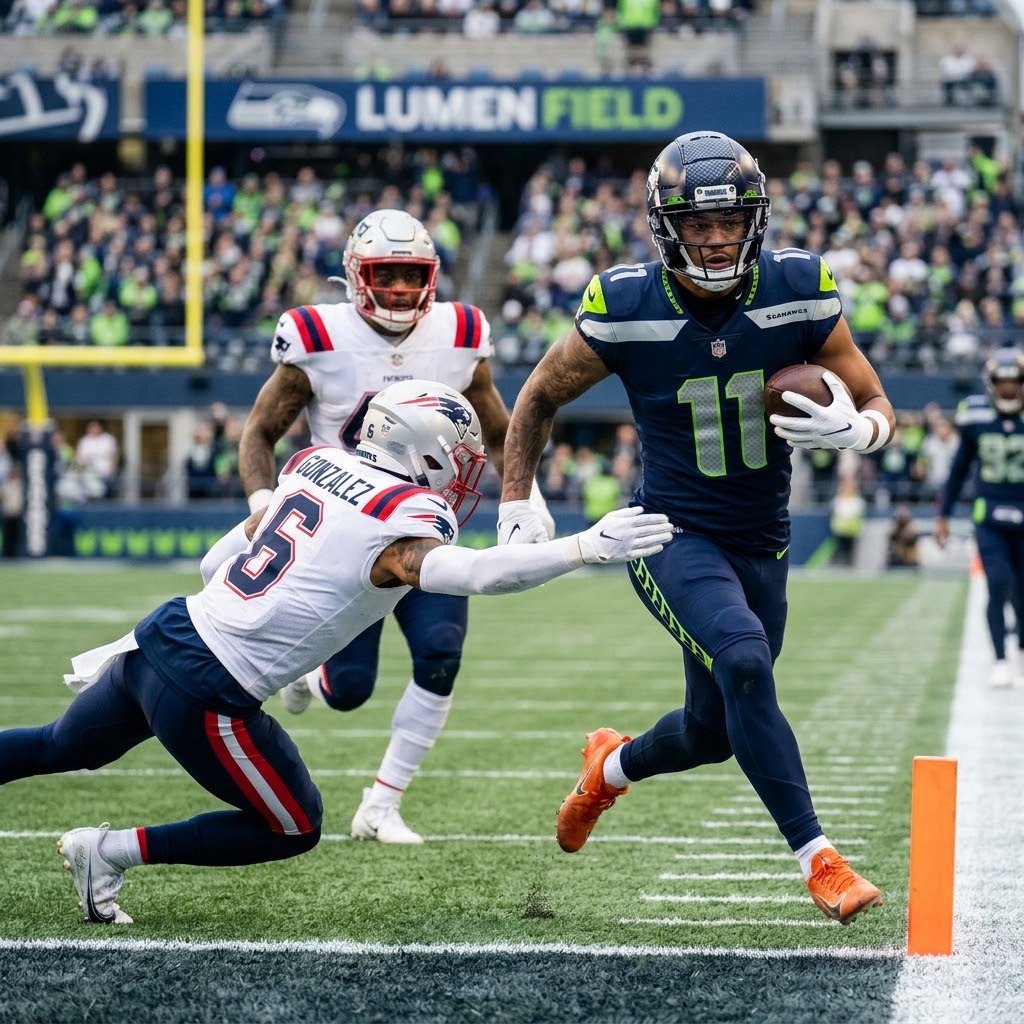
Then came the fourth quarter, and one single play flipped the entire night upside down. Facing a high-stakes fourth-and-1 near midfield, Seattle opted against a conservative punt or an obvious run plunge. Lock took the snap and snapped a quick pass out to Jaxon Smith-Njigba. From New England's defensive perspective, everything went wrong at once. The boundary coverage got caught biting aggressively on the sticks to stop a short conversion, leaving no deep safety support over the top. Smith-Njigba slipped the primary tackle, accelerated down the sideline, and turned a short pass into a game-altering 45-yard touchdown gallop.
That play detonated the energy in the stadium, and the momentum swung entirely in Seattle's favor. Suddenly, New England looked rattled, and the Seahawks smelled blood.
Looking back at the comeback, you have to ask who is really responsible for New England letting this slip away. Was it Drake Maye imploding down the stretch with three fourth-quarter interceptions? Was it questionable sideline coaching that abandoned the run, threw away clock management, and called low-percentage deep shots when only a tying field goal was needed? Or was it simply Macdonald's defense dialing up the exact disguised split-safety looks that forced Maye into panicked mistakes? The answer is likely a messy combination of all three. Maye lost his poise under duress, the play-calling failed to insulate a young passer in the red zone, and Seattle's relentless front took full advantage of the cracks.
Regardless of the chaos, I am just thrilled that NFL football is officially back. It is messy, unpredictable, and impossible to script. We will get plenty of answers about Darnold's health, Lock's staying power, and Maye's growth as the weeks unfold, but game 1 reminded us that ninety seconds of game time can rewrite an entire narrative.