
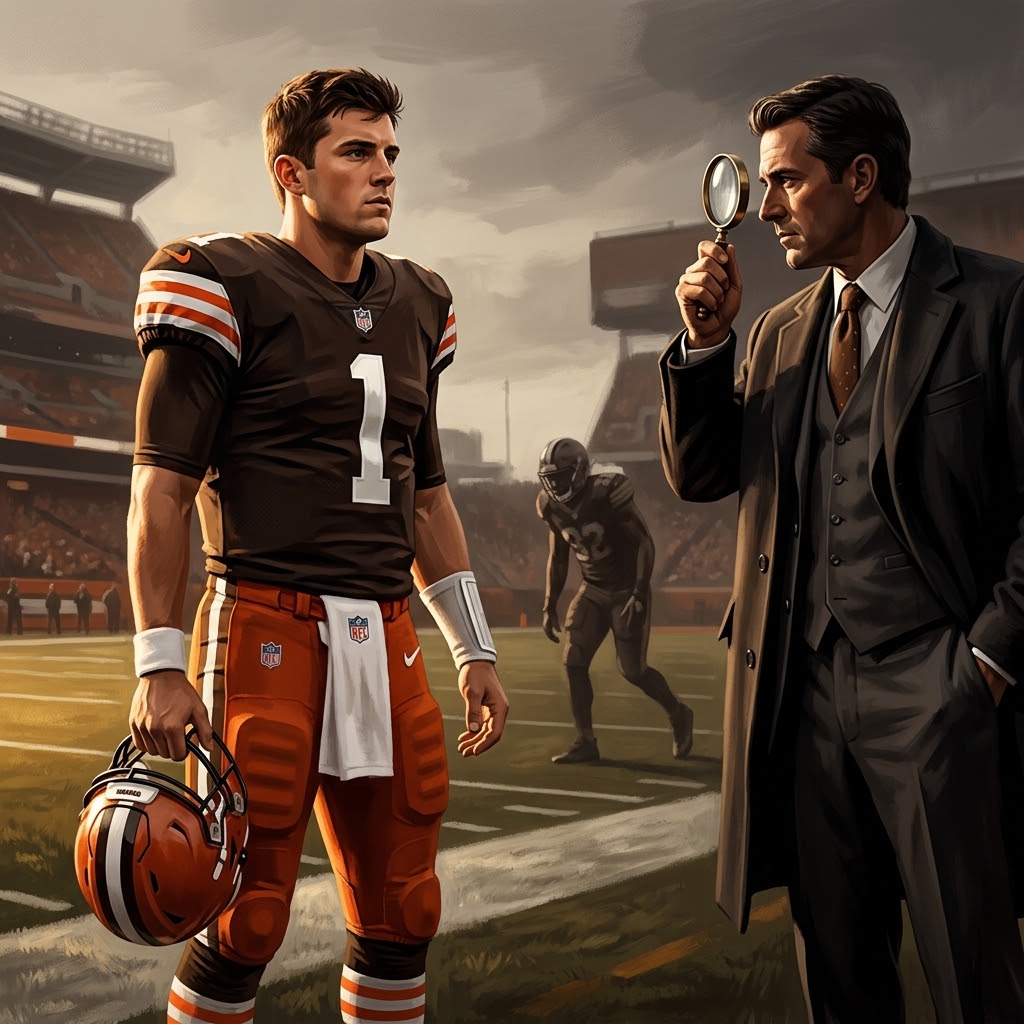
The Cleveland Browns officially closed the book on their summer quarterback derby by naming Deshaun Watson the starter for Week 1 against the Jacksonville Jaguars. Head coach Todd Monken defended the decision by citing Watson’s "full body of work" across OTAs, training camp, and joint practices. In Monken’s view, throwing a 10-year veteran under center gives the Browns their highest offensive floor when opening the season with back-to-back road tests.
On paper, trusting experience is the standard NFL playbook. On the field, you should be deeply skeptical.
Watching the two exhibition games with an objective eye told a completely different story. Shedeur Sanders played with rhythm, poise, and decisive timing inside the pocket. He went through progressions without panic, delivered on time, and gave the offense an actual sense of operational flow.
Watson, meanwhile, looked rusty and disconnected after missing the entire 2025 season. He held onto the football far too long, took unnecessary hits—including a brutal strip-sack against Chicago—and managed just 36 passing yards against Buffalo while being booed off his own home field.
The raw box scores only reinforce what the eye test made obvious:
- - Shedeur Sanders: 15-of-22 (68.2%), 153 yards, 1 TD, 2 INT, 65.2 passer rating
- - Deshaun Watson: 16-of-27 (59.3%), 162 yards, 0 TD, 1 INT, 61.0 passer rating
Sanders was more accurate, more efficient, and produced Cleveland’s only sustained touchdown drives from standard dropbacks. If this decision were genuinely won between the lines in August, Sanders would be taking the first snap in Jacksonville.
Which brings us to the elephant in the room: money.
Browns owner Jimmy Haslam has already publicly admitted the 2022 blockbuster trade was a massive "swing and miss." But acknowledging a mistake in an interview is very different from swallowing your pride on game day.
Watson is collecting $46 million in fully guaranteed cash in 2026—the final playing year of his historic $230 million contract. Because Cleveland repeatedly restructured that contract to push cap hits into the future, the bill has finally arrived. The Browns are staring down an astronomical $86.2 million in unamortized dead cap.
Under NFL salary cap rules, the Browns cannot escape that bill, but they can survive it using a Post-June 1 designation. If Cleveland releases Watson prior to the start of the 2027 league year in March and designates him a Post-June 1 cut, the league allows them to split the $86.2 million dead money across two seasons (~$34.7 million in 2027 and ~$51.5 million in 2028). Without that maneuver, eating the entire charge in 2027 would paralyze over a quarter of their roster payroll in a single season.
Starting Watson in 2026 isn't about winning football games; it is about chasing a phony return on investment. The front office is desperate to extract some shred of value from a $230 million sunk cost before cutting the cord next spring.
It is an intensely short-sighted, self-serving strategy.
Everyone in Berea knows Watson will not be on this roster in 2027. Trotting him out for a ceremonial farewell tour accomplishes nothing for the franchise's trajectory. What Cleveland actually needs is definitive clarity on Shedeur Sanders. Giving the 24-year-old starter reps against first-team defenses is the only way to evaluate whether he is the long-term answer or if the team must draft another quarterback next spring.
Wasting real regular-season snaps on a quarterback who is already out the door just to appease a bloated ledger isn't leadership—it’s organizational denial.