
Disclaimer: Drawing sweeping, career-defining conclusions from a two-week stretch of July exhibition games in Las Vegas is a ridiculous an NBA pastime. It is way too early to judge the long-term potential of the 2026 draft class—plenty of Hall of Famers looked lost in Summer League, while summer MVPs often fade into obscurity by November.
Still, that won't stop front offices, scouts, and fans from asking the question: If we held the draft today based strictly on Summer League performance, how would the top 10 change—and are teams already harboring quiet regrets?
🏀 The Summer League Top 10 Redraft
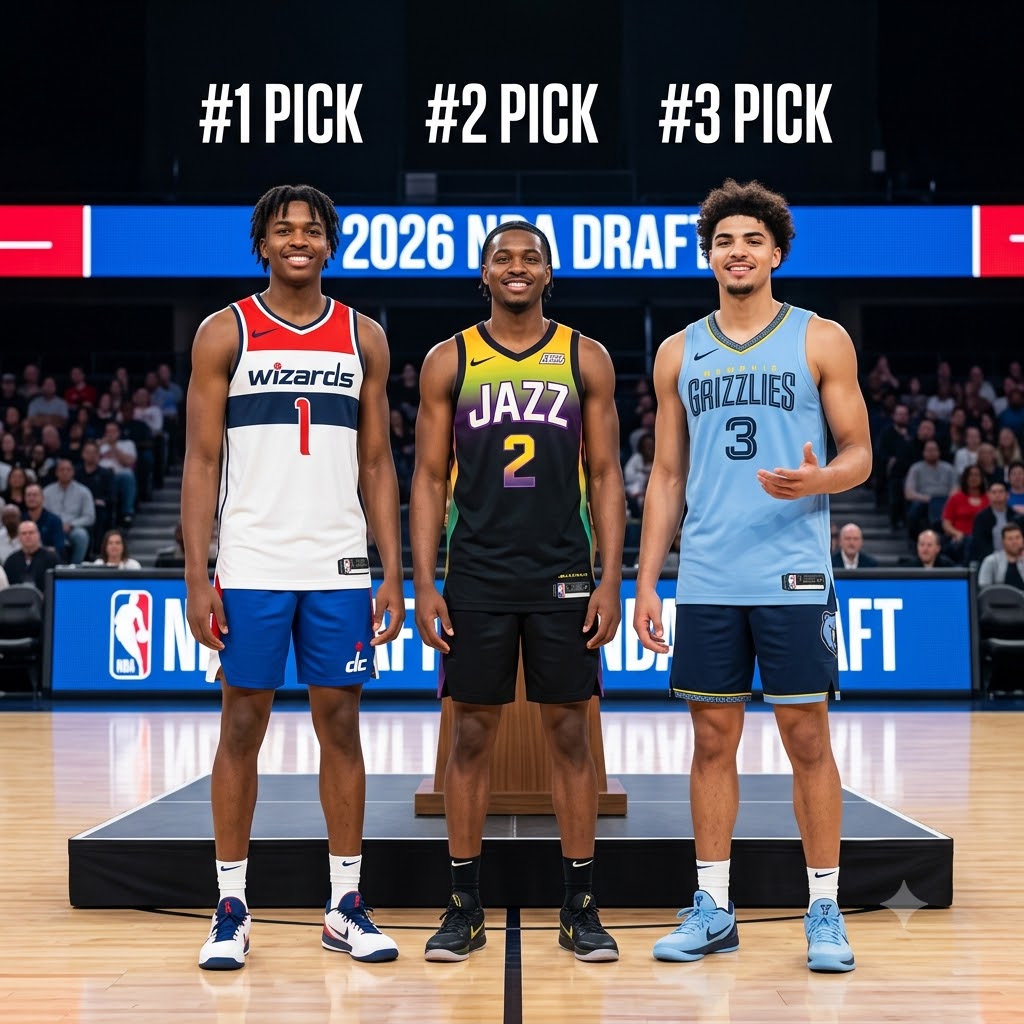
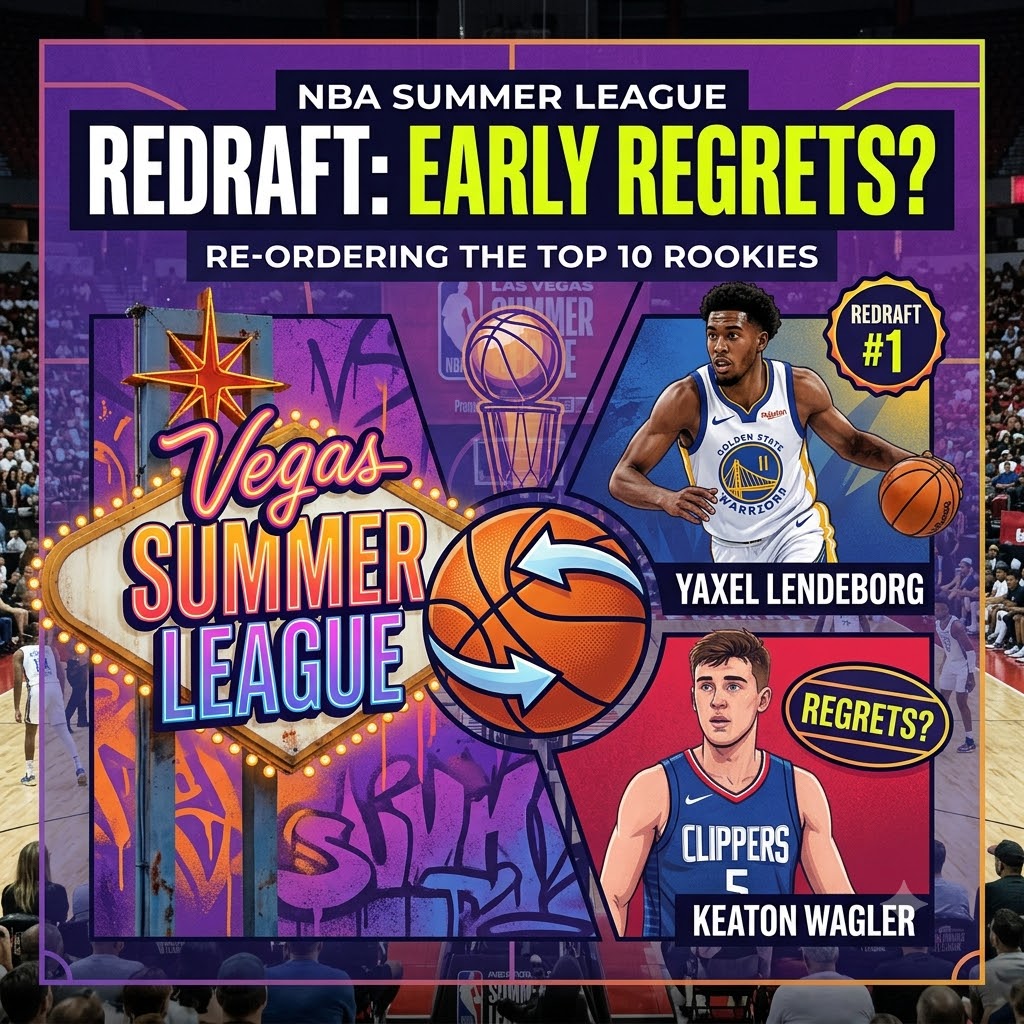
Here is how the top 10 shapes up if we re-order the board purely on Las Vegas, California Classic, and Salt Lake City output. 1. Yaxel Lendeborg (PF/C) — Golden State Warriors Original Draft Position: No. 11 Overall Redraft Justification: Lendeborg didn't just put up numbers—he orchestrated winning. Fresh off a national title run at Michigan, Lendeborg brought championship composure to Vegas, culminating in a 21-point, 10-rebound display in the championship game to capture the Summer League Finals MVP. His 7-foot-4 wingspan, defensive versatility, and seamless plug-and-play fit make him look like the most immediate, NBA-ready winning asset in this draft class. 2. Cameron Boozer (PF) — Memphis Grizzlies Original Draft Position: No. 3 Overall Redraft Justification: Boozer played like a 10-year veteran disguised as a 19-year-old rookie. Anchoring Memphis to the title game, his high-post decision-making, polished footwork, and metronomic 18.5 PPG / 8.0 RPG baseline showed why he is arguably the safest star-level cornerstone in the entire draft. 3. Brayden Burries (SG) — Milwaukee Bucks Original Draft Position: No. 10 Overall Redraft Justification: High-usage rookie guards usually turn the ball over incessantly in Vegas chaos. Burries did the exact opposite, racking up 23.5 PPG on 50% shooting while maintaining a phenomenal 5-to-1 assist-to-turnover ratio. His elite shot-selection elevates him high into this redraft. 4. Caleb Wilson (PF) — Chicago Bulls Original Draft Position: No. 4 Overall Redraft Justification: Wilson holds steady in his top-4 spot, flashing the highest ceiling of any frontcourt player in Vegas. Highlights were headlined by a explosive 35-point outing with seven 3-pointers, proving his perimeter jump shot has caught up to his elite rim-protection and physical tools. 5. Meleek Thomas (SG) — Cleveland Cavaliers Original Draft Position: No. 34 Overall (2nd Round) Redraft Justification: The absolute steal of Las Vegas. Selected in the second round, Thomas completely outplayed his draft slot by leading all players in tournament scoring at 27.1 PPG. His three-level bucket-getting against first-round competition rocketed him straight into the top 5 of our re-draft board. 6. AJ Dybantsa (SF) — Washington Wizards Original Draft Position: No. 1 Overall Redraft Justification: Dybantsa drops slightly purely due to sample size and perimeter shooting struggles (under 10% from deep in Vegas). However, his physical frame, baseline rim pressure (8-of-9 at the rim), and multi-positional defensive event-rate confirmed his franchise-altering athletic ceiling remains fully intact. 7. Darryn Peterson (PG/SG) — Utah Jazz Original Draft Position: No. 2 Overall Redraft Justification: Peterson operated as Utah's primary lead engine with poise. His pick-and-roll navigation and live-dribble passing looked pro-caliber, though minor foul trouble and a few defensive missteps keep him slightly below the redraft top 5 for now.8. Darius Acuff Jr. (PG) — Sacramento Kings
Original Draft Position: No. 7 Overall
Redraft Justification: Acuff backed up his top-10 selection with elite change-of-pace playmaking and floater touch across both the Salt Lake City and Vegas circuits. He commanded the floor with the exact urgency Sacramento needed.
9. Liam McNeeley (SF) — Charlotte Hornets
Original Draft Position: No. 14 Overall
Redraft Justification: McNeeley moves up into the lottery thanks to elite movement shooting. In a league where floor-spacing is king, McNeeley's 42.5% clip from beyond the arc—including a 7-three-pointer, 28-point outburst—makes his off-ball value instant and undeniable.
10. Kingston Flemings (PG) — Atlanta Hawks
Original Draft Position: No. 8 Overall
Redraft Justification: Flemings secures the final spot in the top 10 on the back of his point-of-attack defense. In an environment usually dominated by undisciplined isolation play, Flemings stood out by turning defense into fast-break offense and controlling tempo as a true floor general.