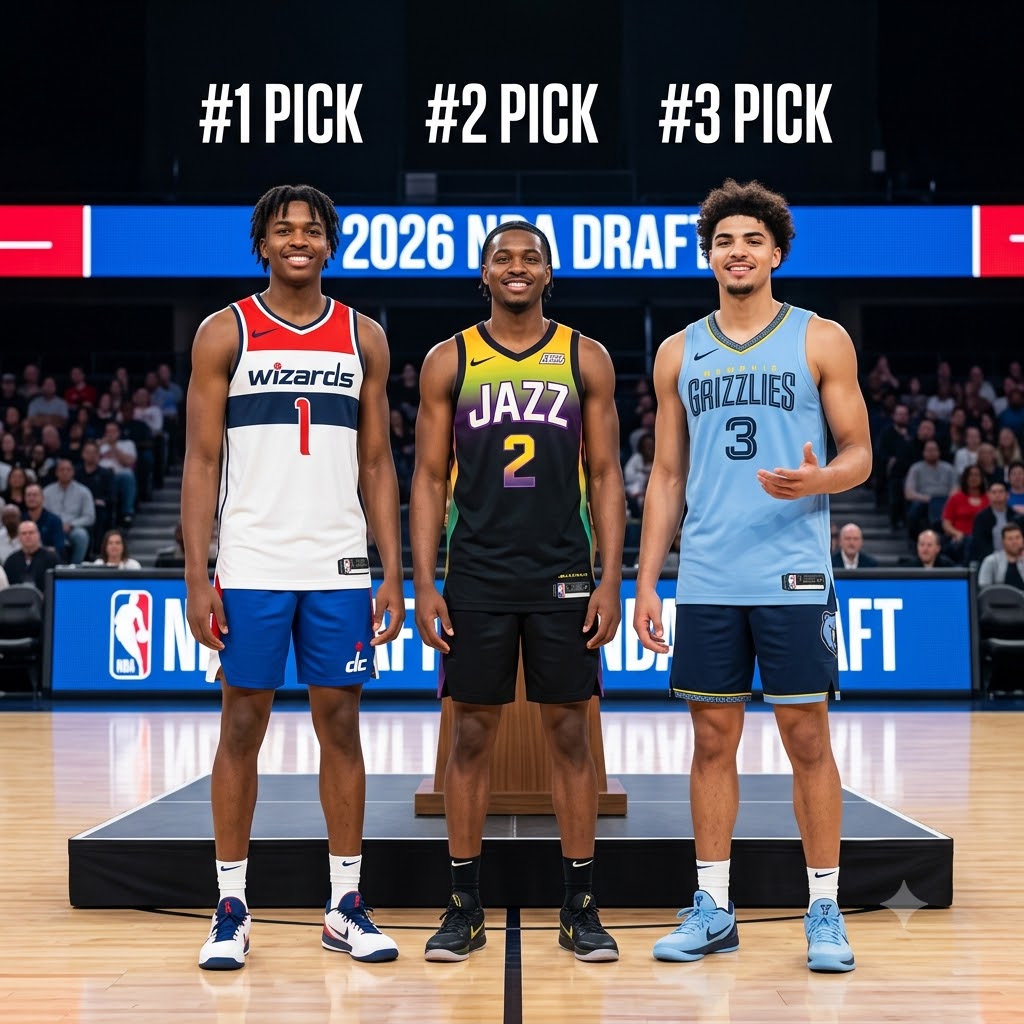
Hours before a single prospect could put on a team cap, a seismic transaction fundamentally altered front-office strategies across the board, setting off a chain reaction of reaches, slides, and masterclass draft hauls.The draft strategy of multiple lottery teams was instantly rewritten on Monday night when the Milwaukee Bucks pulled the trigger on a franchise-altering blockbuster. Milwaukee traded two-time MVP Giannis Antetokounmpo and Bobby Portis to the Miami Heat in exchange for a massive package featuring Tyler Herro, Jaime Jaquez Jr., Kel'el Ware, Kasparas Jakucionis, and a treasure trove of draft capital; including the No. 13 pick. This sudden, aggressive pivot by Milwaukee to enter a hard rebuild completely flipped the script for the mid-first round. Teams that had spent months building big boards based on a predictable mid-lottery order suddenly had to account for a hyper-aggressive Bucks front office hunting for high-upside prospects to anchor their new timeline. While the trade market blew up, the absolute top of the draft order brought an air of expected order. Front offices held their nerve, ensuring the first three names off the board matched consensus mock drafts perfectly:No. 1 (Washington Wizards): AJ Dybantsa (BYU) — The dynamic forward heads to D.C. as the undisputed crown jewel of the class.No. 2 (Utah Jazz): Darryn Peterson (Kansas) — The explosive guard went to Salt Lake City to give the Jazz a definitive perimeter anchor. No. 3 (Memphis Grizzlies): Cameron Boozer (Duke) — Memphis happily grabbed the elite, polished power forward to reinforce their frontcourt identity. Once the draft moved past the opening tier, team-specific evaluations triggered a few major surprises. Front offices prioritized their specific schematic needs, turning multiple players into shocking top-15 selections. The Mavericks made the first massive leap of the night. With head coach Dusty May recently arriving from Michigan, Dallas bypassed several highly ranked global prospects to draft his former Wolverine big man, Morez Johnson Jr., far earlier than most analysts projected. Next, at No. 15, the Bulls raised eyebrows by using their second first-round pick on the Texas guard/forward. While Swain’s raw traits are undeniably intriguing, consensus boards viewed him as a fringe first-rounder, making this a massive bet on development by Chicago.Every draft has its heartbreak stories, and this year saw several highly regarded collegiate and high school stars completely slide out of the opening round. Isaiah Evans (Duke), the dynamic wing scorer, was widely expected to be a lock for a mid-to-late first-round selection but sat through the entire first night before being snapped up by Minnesota in the second round. A consensus top-tier talent on several big boards, Meleek Thomas (Arkansas) experienced a precipitous drop, eventually stopping at the Cleveland Cavaliers early in Round 2.When the dust settled on the first round, a few organizations stood out for maximizing their value and turning the board's volatility in their favor. The Brooklyn Nets put on a masterclass in opportunistic rebuilding. They secured their long-term point guard in Mikel Brown Jr. at No. 6, and smoothly navigated a late-round three-team trade with Detroit and Minnesota to absorb versatile veteran Julius Randle alongside pick No. 28. Meanwhile, the Chicago Bulls weaponized their assets beautifully. Not only did they grab high-floor star Caleb Wilson at No. 4 and swing for Swain at 15, but they also completely re-tooled their backcourt rotation by acquiring Jaden Ivey, Mike Conley, and Nic Claxton through multi-team draft-night deals. Ultimately, the 2026 NBA Draft proved that the modern league values flexibility and bold decision-making above all else. From Miami’s earth-shattering acquisition of Giannis Antetokounmpo to the aggressive draft-night maneuvering by re-tooling franchises like Chicago and Brooklyn, front offices made it clear that they are no longer content waiting around for the future to happen. While the top of the board provided the star-studded foundation everyone anticipated, it was the chaotic margins of the first round—defined by jaw-dropping reaches and agonizing slides—that will truly dictate the competitive balance of the league for years to come. Front offices have placed their bets; now, the real work begins on the hardwood.
NBA
Blockbusters and Curveballs: Breaking Down the 2026 NBA Draft
The NBA Draft is always a crucible of hope and high-stakes gambling, but the 2026 iteration will be remembered as the night the league’s landscape didn’t just shift, it fractured.

Ryan A