
I’ve come to a realization: Major League Baseball’s All-Star events are officially the only ones left in professional sports that I can actually sit down and watch.Let's be honest about the state of modern all-star exhibitions. The NFL Pro Bowl became such a non-competitive, low-effort joke that they literally had to kill it and replace it with flag football. Over in the NBA, the Dunk Contest has completely lost its luster, and the All-Star Game itself is a glorified, defense-free jogging session where nobody wants to break a sweat. It is incredibly refreshing to tune into MLB's midsummer showcase and actually see elite athletes trying, competing, and caring about the outcome.That effort was on display during Tuesday night's All-Star Game at Citizens Bank Park, even if the initial excitement didn't quite hold up. Early on, the energy was through the roof. The Yankees' Cody Bellinger and Ben Rice jumped all over the NL in the first inning to put the AL up 3-0. I was ready for a high-scoring, back-and-forth slugfest. But as the night wore on, that initial buzz slowly faded.Instead of an offensive showcase, the game devolved into a dominant, albeit slow-burning, pitching duel. The American League's pitching staff was an absolute buzzsaw, completely stifling the NL hitters on their way to a 4-0 shutout—the first All-Star shutout we’ve seen since 2013. Don't get me wrong, I appreciate great pitching, but watching 15 strikeouts over nine innings of base-runner-free baseball doesn't exactly make for nail-biting television.Fortunately, the Home Run Derby on Monday night more than made up for it. It was, without a doubt, the absolute highlight of the entire week, and it was all thanks to MLB's brilliant new format.Going into this year, MLB completely scrapped the stressful, chaotic timer that had been in place since 2015. Instead, they instituted a non-timed, universal "swing-cap" format—giving players 20 swings in the first round and 15 in the subsequent rounds. The change was an instant home run. It completely removed the frantic rushing, allowing players to pace themselves and giving fans a chance to actually watch the ball travel. But the real stroke of genius was the "Comeback Streak" rule: if you hit a home run on your very last swing, you get to keep swinging until you miss.This rule single-handedly delivered one of the most exciting finishes I have ever witnessed.
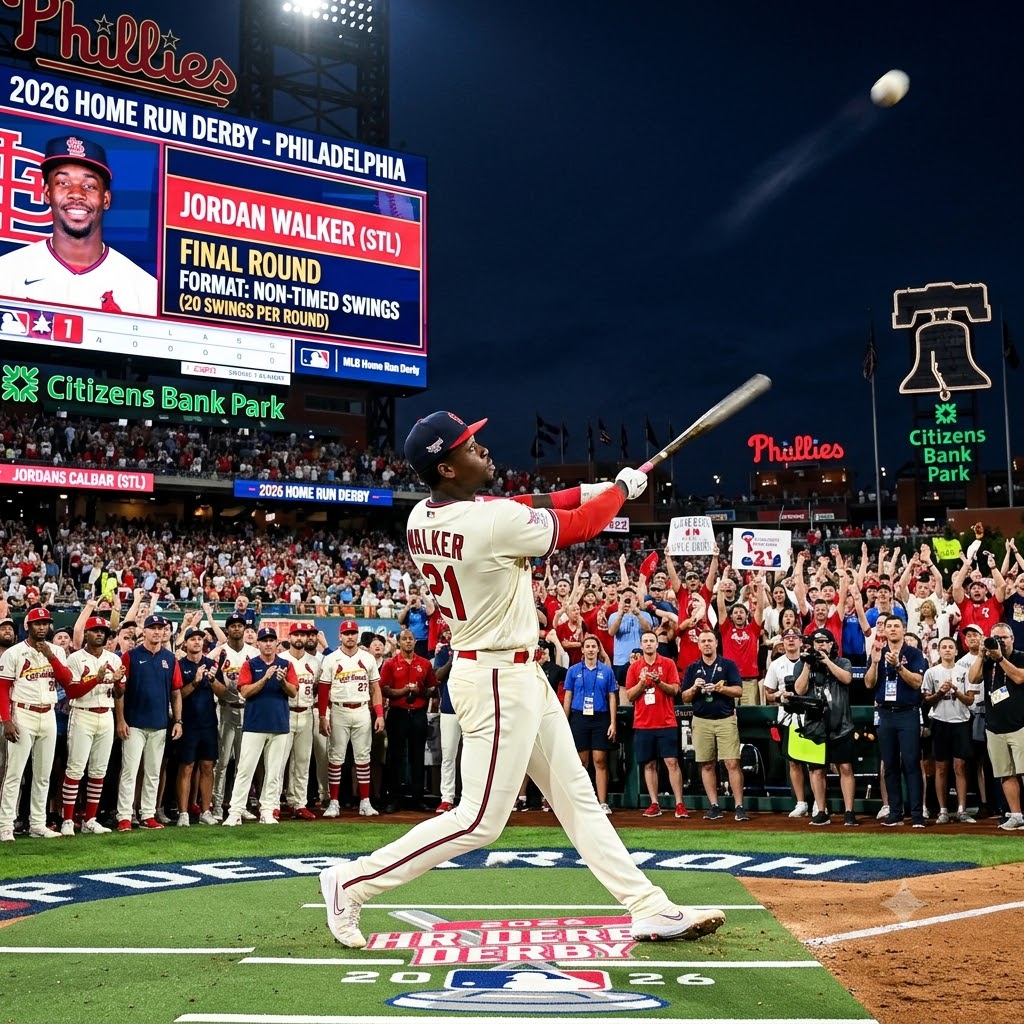
The hometown Philadelphia crowd spent the entire night ruthlessly booing every single non-Phillies player, desperately wanting Kyle Schwarber to take the crown. Schwarber put up a massive 11 home runs in the final round. When the Cardinals' Jordan Walker stepped up, he looked completely dead in the water. With every swing that did not go over then fence the crowd went wild. Then sitting at just eight home runs with his official swings running out. He needed to hit consecutive homers just to survive.What followed was pure theater. On his 15th and final swing, Walker launched one over the wall, triggering the "Comeback Streak" bonus. With the stadium holding its breath, he stayed locked in, launching six consecutive home runs on his bonus swings to walk it off 12–11. It was a jaw-dropping, legendary moment that would have been physically impossible under the old timed format. Even the ruthless Philly crowd had to give in and cheer the final winning home run swing. It was truly fun to watch.Ultimately, this week proved that MLB is simply not afraid to make bold changes to its product. From the pitch clock in the regular season to this brilliant new Derby format, baseball is actively listening to fans and evolving. It’s a masterclass in how to modernize sports entertainment, and it’s working out for the absolute better.
The hometown Philadelphia crowd spent the entire night ruthlessly booing every single non-Phillies player, desperately wanting Kyle Schwarber to take the crown. Schwarber put up a massive 11 home runs in the final round. When the Cardinals' Jordan Walker stepped up, he looked completely dead in the water. With every swing that did not go over then fence the crowd went wild. Then sitting at just eight home runs with his official swings running out. He needed to hit consecutive homers just to survive.What followed was pure theater. On his 15th and final swing, Walker launched one over the wall, triggering the "Comeback Streak" bonus. With the stadium holding its breath, he stayed locked in, launching six consecutive home runs on his bonus swings to walk it off 12–11. It was a jaw-dropping, legendary moment that would have been physically impossible under the old timed format. Even the ruthless Philly crowd had to give in and cheer the final winning home run swing. It was truly fun to watch.Ultimately, this week proved that MLB is simply not afraid to make bold changes to its product. From the pitch clock in the regular season to this brilliant new Derby format, baseball is actively listening to fans and evolving. It’s a masterclass in how to modernize sports entertainment, and it’s working out for the absolute better.