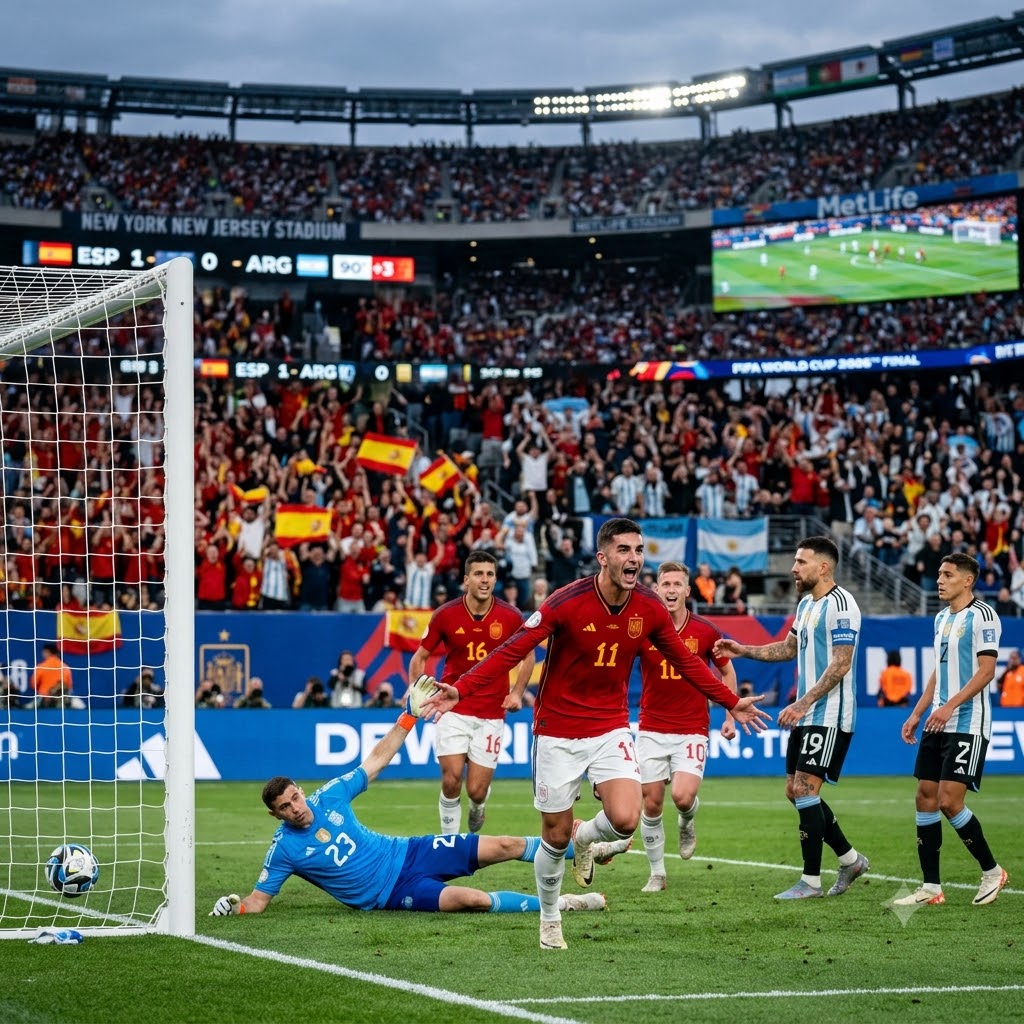

The biggest sporting event on the planet is about to land right on our doorstep.If you are an American sports fan who usually only tunes in for the Super Bowl, the NBA Finals, or October baseball, you might be wondering why your social media feeds are suddenly overflowing with soccer news. For the first time since 1994, the FIFA Men’s World Cup is returning to North America.Whether you’re trying to survive water-cooler chat or looking to pick a team to root for, here is everything you need to know about the tournament before kickoff.Where in the World Is It? (Hint: Check Outside Your Window)
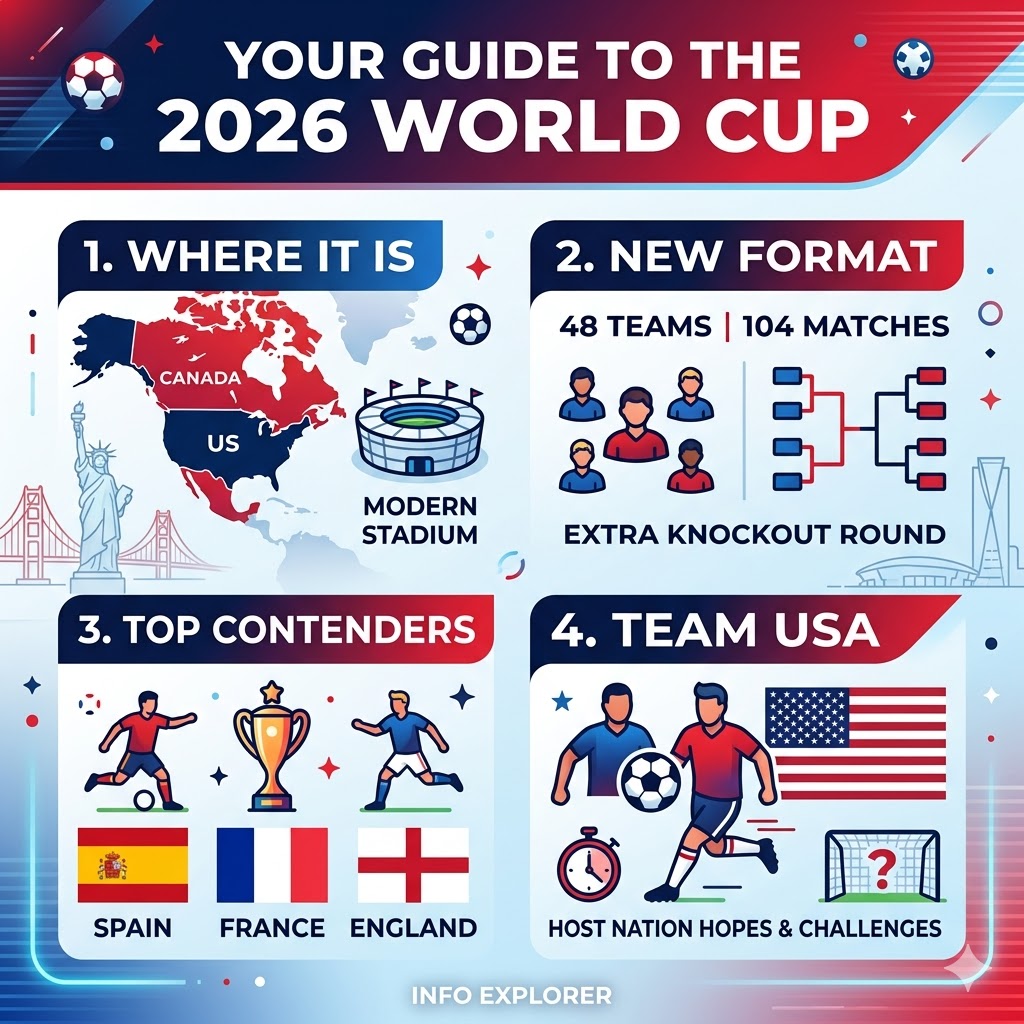
Unlike the Olympics, which takes over a single city, the World Cup is too massive for one town. The tournament is being jointly hosted by three nations: the United States, Canada, and Mexico. While our neighbors to the north and south are hosting their fair share of games, the United States is the primary staging ground. A total of 16 stadiums are being used, and if you live near a major NFL city, there is a very good chance the world's best athletes are coming to your local stadium. To keep teams from spending half the tournament on a cross-country flight, FIFA has split the venues into three geographical regional pods. The West Coast Pod: Anchored by SoFi Stadium in Los Angeles, Levi’s Stadium in Santa Clara, and Lumen Field in Seattle, alongside Vancouver and Guadalajara. The Central Pod: Featuring massive venues in Dallas, Houston, Kansas City, and Mexico City. The East Coast Pod: Dominated by MetLife Stadium (New York/New Jersey), Boston, Philadelphia, Atlanta, Miami, and Toronto.If you remember anything about past World Cups, throw it out. FIFA has completely blown up the traditional playbook, expanding the tournament from 32 teams to 48 teams. Think of it as expanding the NCAA tournament—more teams, more games, and way more chaos. The total number of matches is skyrocketing from 64 to a whopping 104 games spread across 39 days.
With all of the new teams added we now have 12 groups where the top 2 team advance as before. What is new here? Now have eight 3rd place wild card teams which will be used to round out the field of 32 for the beginning of the knockout round. Because of the new "third-place wildcard" rule, the opening group stage is going to feel a lot like the final days of the NFL regular season. Teams that finish third in their group won't know if they are eliminated or advancing until the final group finishes playing days later, creating incredible drama.Who Are the Favorites?
If you want to look smart when talking to soccer purists, these are the teams currently dominating the sportsbook odds:
- Spain (+450 / 16.5% Win Probability): The statistical favorites. They play a beautiful, high-speed style of offense led by their teenage phenom superstar, Lamine Yamal.
- France (+500 / 16.0% Win Probability): Think of them like the powerhouse Kansas City Chiefs of soccer. They have arguably the best player in the world, Kylian Mbappé, and their roster depth is so deep that their "B-Team" could probably contend for a title.
- England (+700 / 10.5% Win Probability): Packed with elite Premier League stars like Jude Bellingham and Harry Kane. They have the firepower to win it all, but historically, England is notorious for choking under pressure in the final rounds.Now for the home team. Under new manager Mauricio Pochettino—a highly respected global coach hired specifically to elite-level program standards—the U.S. Men's National Team (USMNT) enters the tournament with a mix of historic opportunity and sudden anxiety. The U.S. has a massive structural advantage: Home-field bias. They are placed in Group D, meaning they play all three of their initial group stage games on the West Coast (two in Los Angeles, one in Seattle). If they win their group as projected, the bracket sets them up to stay on the West Coast all the way through the Round of 16, playing in front of hyper-partisan American crowds.The team is currently limping into the tournament with some serious roster drama. Midfielder Johnny Cardoso was recently lost to major ankle surgery, and elite center-back Chris Richards (the anchor of the defense) has been sidelined with damaged ankle ligaments. Worse yet, the goalie situation is under intense media fire. Following a shaky 2-1 loss to Germany in their final warm-up game at Soldier Field in Chicago, sports analysts are openly questioning if the U.S. has a reliable "netminder" capable of stopping world-class strikers. Can they win the whole thing? Vegas gives them a +6000 long-shot line to hoist the trophy, which means a literal championship is highly unlikely. However, their chances of making a deep, historic run are very real. Because of the favorable bracket layout and home crowds, data models give the U.S. an excellent shot at blasting through the Round of 32 and Round of 16 to reach the Quarter-finals. If they make it to the final eight, they will likely match up against a giant like Spain or Argentina—and in a single-elimination tournament, anything can happen.
Unlike the Olympics, which takes over a single city, the World Cup is too massive for one town. The tournament is being jointly hosted by three nations: the United States, Canada, and Mexico. While our neighbors to the north and south are hosting their fair share of games, the United States is the primary staging ground. A total of 16 stadiums are being used, and if you live near a major NFL city, there is a very good chance the world's best athletes are coming to your local stadium. To keep teams from spending half the tournament on a cross-country flight, FIFA has split the venues into three geographical regional pods. The West Coast Pod: Anchored by SoFi Stadium in Los Angeles, Levi’s Stadium in Santa Clara, and Lumen Field in Seattle, alongside Vancouver and Guadalajara. The Central Pod: Featuring massive venues in Dallas, Houston, Kansas City, and Mexico City. The East Coast Pod: Dominated by MetLife Stadium (New York/New Jersey), Boston, Philadelphia, Atlanta, Miami, and Toronto.If you remember anything about past World Cups, throw it out. FIFA has completely blown up the traditional playbook, expanding the tournament from 32 teams to 48 teams. Think of it as expanding the NCAA tournament—more teams, more games, and way more chaos. The total number of matches is skyrocketing from 64 to a whopping 104 games spread across 39 days.
With all of the new teams added we now have 12 groups where the top 2 team advance as before. What is new here? Now have eight 3rd place wild card teams which will be used to round out the field of 32 for the beginning of the knockout round. Because of the new "third-place wildcard" rule, the opening group stage is going to feel a lot like the final days of the NFL regular season. Teams that finish third in their group won't know if they are eliminated or advancing until the final group finishes playing days later, creating incredible drama.Who Are the Favorites?
If you want to look smart when talking to soccer purists, these are the teams currently dominating the sportsbook odds:
- Spain (+450 / 16.5% Win Probability): The statistical favorites. They play a beautiful, high-speed style of offense led by their teenage phenom superstar, Lamine Yamal.
- France (+500 / 16.0% Win Probability): Think of them like the powerhouse Kansas City Chiefs of soccer. They have arguably the best player in the world, Kylian Mbappé, and their roster depth is so deep that their "B-Team" could probably contend for a title.
- England (+700 / 10.5% Win Probability): Packed with elite Premier League stars like Jude Bellingham and Harry Kane. They have the firepower to win it all, but historically, England is notorious for choking under pressure in the final rounds.Now for the home team. Under new manager Mauricio Pochettino—a highly respected global coach hired specifically to elite-level program standards—the U.S. Men's National Team (USMNT) enters the tournament with a mix of historic opportunity and sudden anxiety. The U.S. has a massive structural advantage: Home-field bias. They are placed in Group D, meaning they play all three of their initial group stage games on the West Coast (two in Los Angeles, one in Seattle). If they win their group as projected, the bracket sets them up to stay on the West Coast all the way through the Round of 16, playing in front of hyper-partisan American crowds.The team is currently limping into the tournament with some serious roster drama. Midfielder Johnny Cardoso was recently lost to major ankle surgery, and elite center-back Chris Richards (the anchor of the defense) has been sidelined with damaged ankle ligaments. Worse yet, the goalie situation is under intense media fire. Following a shaky 2-1 loss to Germany in their final warm-up game at Soldier Field in Chicago, sports analysts are openly questioning if the U.S. has a reliable "netminder" capable of stopping world-class strikers. Can they win the whole thing? Vegas gives them a +6000 long-shot line to hoist the trophy, which means a literal championship is highly unlikely. However, their chances of making a deep, historic run are very real. Because of the favorable bracket layout and home crowds, data models give the U.S. an excellent shot at blasting through the Round of 32 and Round of 16 to reach the Quarter-finals. If they make it to the final eight, they will likely match up against a giant like Spain or Argentina—and in a single-elimination tournament, anything can happen.