
A perfect storm of skyrocketing franchise valuations, a landmark media rights deal, and a newly minted, highly lucrative labor agreement has fundamentally shifted the league’s economic paradigm. Yet beneath the headline-grabbing numbers lies a fascinating paradox: the WNBA is commanding massive, billion-dollar speculative valuations while historically operating at a loss.Part 1: The Valuation Explosion
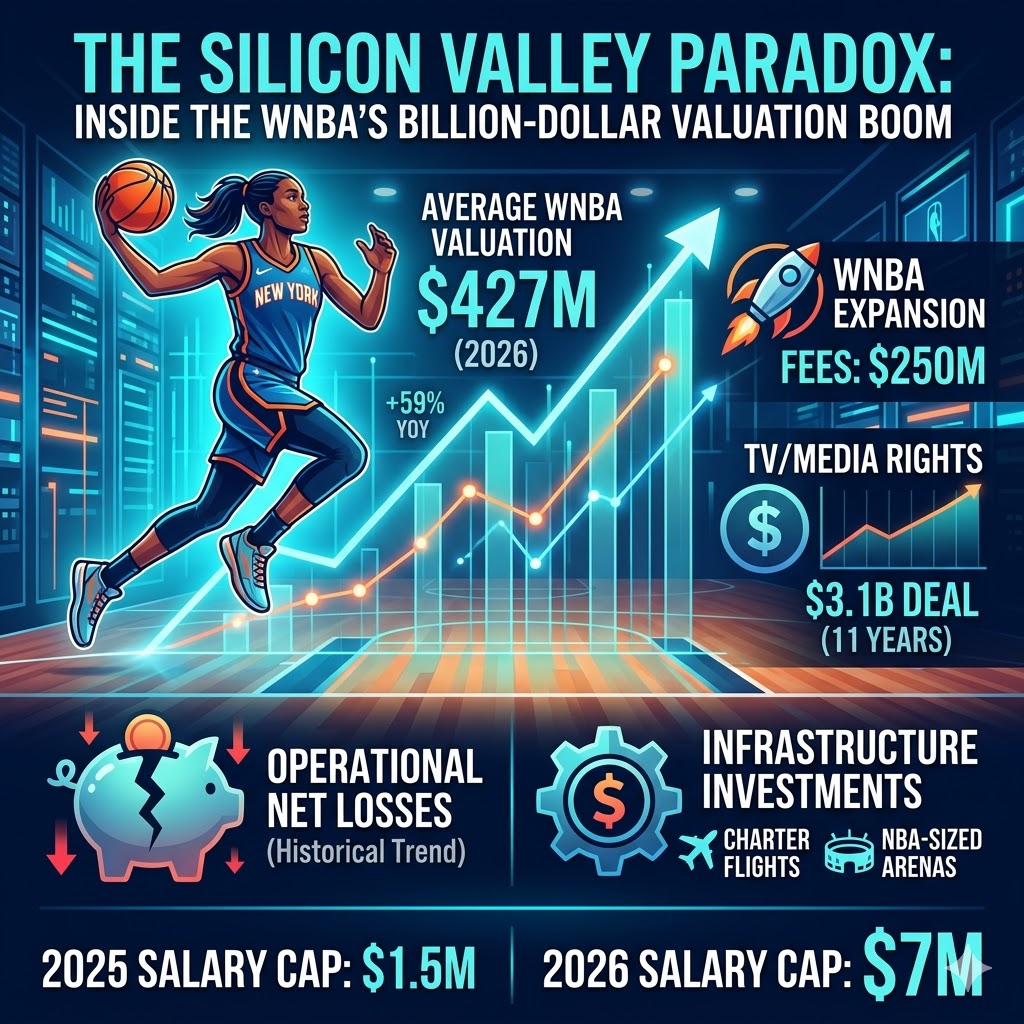
If you want to understand the current financial frenzy surrounding the WNBA, look no further than Sportico’s mid-2026 valuation report. The data reveals that the average WNBA franchise value has surged to $427 million—a staggering 59% jump from 2025 and an eye-popping 345% increase since 2024.
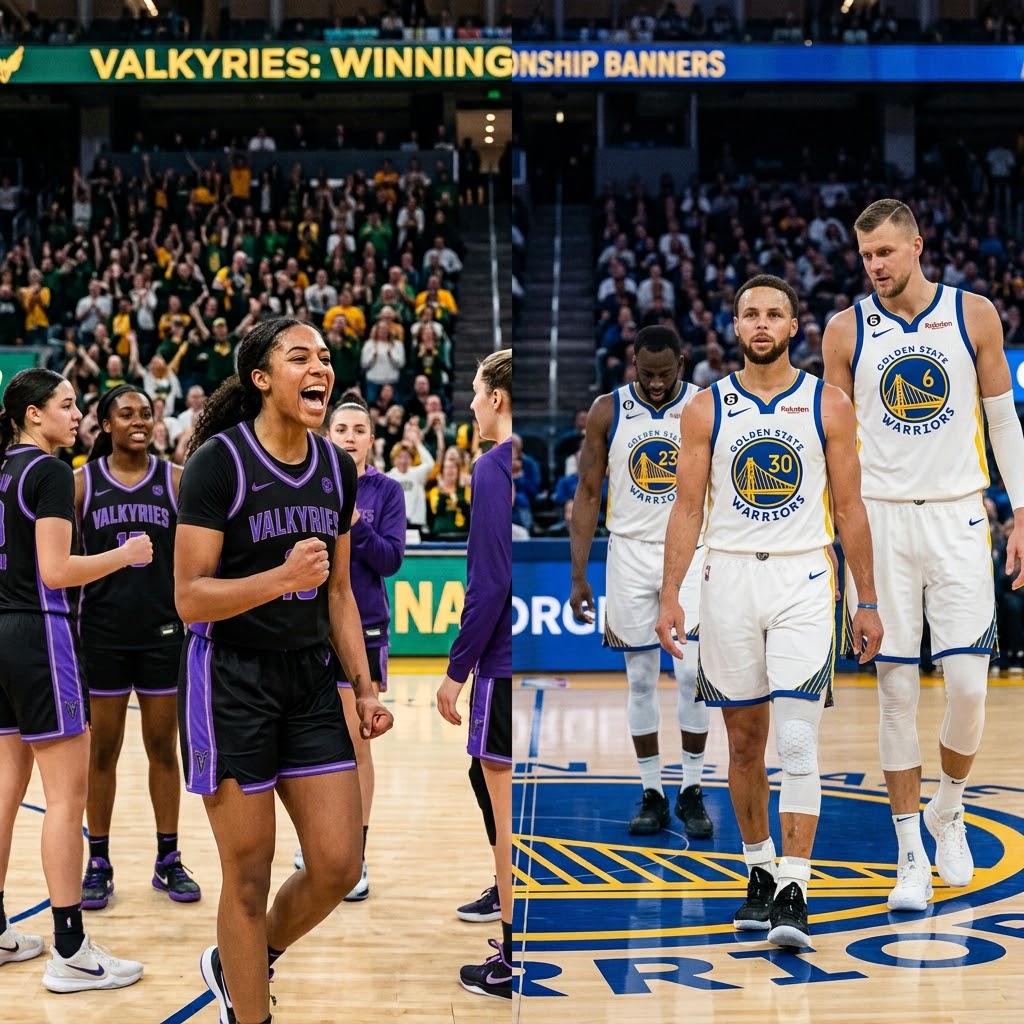
At the apex of this boom are the Golden State Valkyries, valued at a league-high $850 million. The Valkyries generated a historic $78 million in revenue during their debut season alone, backed by a massive base of over 10,000 season ticket holders. Close behind are the reigning New York Liberty at $600 million and the Indiana Fever—the epicenter of the "Caitlin Clark effect"—at $560 million. Even the baseline has shifted dramatically; the league’s lowest-valued team, the Atlanta Dream, is worth $280 million. Just two years ago, a hundred-million-dollar valuation for a women’s basketball team was considered a distant dream.This hyper-inflation is being driven by institutional investors and private equity firms who see the WNBA as premium, live-sports inventory. Because men's major leagues represent "mature" assets with stabilized growth, capital is flooding into women’s sports, viewing it as a high-upside frontier that has been historically underpriced.Part 2: The Profitability Paradox
How does a league where franchises are pushing toward billion-dollar valuations reconcile with the fact that, on a collective level, the WNBA has never turned a net profit in its history? For its first 27 years, the league operated at a steady baseline deficit, losing an average of $10 million annually. It survived because the NBA—which still holds a massive equity stake in the league—subsidized those operational losses, treating the WNBA as a long-term startup asset.When interest and viewership exploded, revenue surged to an unprecedented $410 million. Counterintuitively, league-wide losses actually expanded during this growth phase. This happened because the WNBA had to rapidly upgrade its infrastructure overnight to meet its newfound scale. The league poured millions into critical infrastructure. It codified full-season charter air travel for player health and safety, migrated games to larger NBA-sized arenas (which drastically increased game-day production costs), and completely overhauled its streaming technology to support global demand.This is the Silicon Valley model of sports business. Much like tech giants Amazon or Uber spent years losing money while their valuations soared, investors are pricing WNBA teams based on future revenue potential, not today's cash flow. They are buying the trajectory.Part 3: The New Cash and the $7 Million Salary Cap
The ultimate validation of this growth trajectory arrived via the broadcast booth. The WNBA finalized a monumental, 11-year media rights portfolio worth $3.1 billion with giants like Disney, NBCUniversal, Amazon Prime Video, Paramount, and Scripps. This deal delivers an average annual value of $281 million—nearly 6.5 times the league's previous TV revenue. This massive influx of media cash, combined with lucrative $250 million expansion fees from incoming ownership groups, set the stage for a historic labor showdown. Recognizing their leverage, the players opted out of their previous labor agreement, forcing a complete overhaul of the league's economic structure. The result is a transformational 7-year Collective Bargaining Agreement (CBA) running through 2032 that completely redefines player compensation.The team salary cap has undergone a near-quintuple jump. The cap for the season is set at a fixed $7.0 million per team, up from just $1.5 million. Fueled by the new TV money, the cap is projected to scale past $11 million by 2031. This cap expansion has created the first true multi-millionaire class in women's professional basketball, drastically lifting the floor for rookies and veterans alike. Maximum-salaried players will earn $1.4 million, a figure projected to climb to over $2.4 million by the end of the deal. Base minimums now hover between $270,000 and $300,000. Furthermore, top draft picks enter the league on a significantly upgraded scale, with the No. 1 overall pick commanding a starting salary of $500,000. The fiercest battleground during negotiations was the revenue-sharing model. While the players pushed for a high percentage of gross revenue and the league attempted to protect itself by offering a percentage of net profits, the two sides ultimately compromised on a system tied to Shared Basketball Revenue (SBR). Moving forward, the salary cap will be directly tied to 20% of the league’s shared revenues from the prior year, providing the players with unlimited financial upside as the sport continues to grow. The WNBA has officially graduated from a subsidized startup into a major commercial engine. While the league navigates its final steps toward true operational profitability, its economic foundation is now structurally aligned with its massive cultural footprint.
If you want to understand the current financial frenzy surrounding the WNBA, look no further than Sportico’s mid-2026 valuation report. The data reveals that the average WNBA franchise value has surged to $427 million—a staggering 59% jump from 2025 and an eye-popping 345% increase since 2024.
At the apex of this boom are the Golden State Valkyries, valued at a league-high $850 million. The Valkyries generated a historic $78 million in revenue during their debut season alone, backed by a massive base of over 10,000 season ticket holders. Close behind are the reigning New York Liberty at $600 million and the Indiana Fever—the epicenter of the "Caitlin Clark effect"—at $560 million. Even the baseline has shifted dramatically; the league’s lowest-valued team, the Atlanta Dream, is worth $280 million. Just two years ago, a hundred-million-dollar valuation for a women’s basketball team was considered a distant dream.This hyper-inflation is being driven by institutional investors and private equity firms who see the WNBA as premium, live-sports inventory. Because men's major leagues represent "mature" assets with stabilized growth, capital is flooding into women’s sports, viewing it as a high-upside frontier that has been historically underpriced.Part 2: The Profitability Paradox
How does a league where franchises are pushing toward billion-dollar valuations reconcile with the fact that, on a collective level, the WNBA has never turned a net profit in its history? For its first 27 years, the league operated at a steady baseline deficit, losing an average of $10 million annually. It survived because the NBA—which still holds a massive equity stake in the league—subsidized those operational losses, treating the WNBA as a long-term startup asset.When interest and viewership exploded, revenue surged to an unprecedented $410 million. Counterintuitively, league-wide losses actually expanded during this growth phase. This happened because the WNBA had to rapidly upgrade its infrastructure overnight to meet its newfound scale. The league poured millions into critical infrastructure. It codified full-season charter air travel for player health and safety, migrated games to larger NBA-sized arenas (which drastically increased game-day production costs), and completely overhauled its streaming technology to support global demand.This is the Silicon Valley model of sports business. Much like tech giants Amazon or Uber spent years losing money while their valuations soared, investors are pricing WNBA teams based on future revenue potential, not today's cash flow. They are buying the trajectory.Part 3: The New Cash and the $7 Million Salary Cap
The ultimate validation of this growth trajectory arrived via the broadcast booth. The WNBA finalized a monumental, 11-year media rights portfolio worth $3.1 billion with giants like Disney, NBCUniversal, Amazon Prime Video, Paramount, and Scripps. This deal delivers an average annual value of $281 million—nearly 6.5 times the league's previous TV revenue. This massive influx of media cash, combined with lucrative $250 million expansion fees from incoming ownership groups, set the stage for a historic labor showdown. Recognizing their leverage, the players opted out of their previous labor agreement, forcing a complete overhaul of the league's economic structure. The result is a transformational 7-year Collective Bargaining Agreement (CBA) running through 2032 that completely redefines player compensation.The team salary cap has undergone a near-quintuple jump. The cap for the season is set at a fixed $7.0 million per team, up from just $1.5 million. Fueled by the new TV money, the cap is projected to scale past $11 million by 2031. This cap expansion has created the first true multi-millionaire class in women's professional basketball, drastically lifting the floor for rookies and veterans alike. Maximum-salaried players will earn $1.4 million, a figure projected to climb to over $2.4 million by the end of the deal. Base minimums now hover between $270,000 and $300,000. Furthermore, top draft picks enter the league on a significantly upgraded scale, with the No. 1 overall pick commanding a starting salary of $500,000. The fiercest battleground during negotiations was the revenue-sharing model. While the players pushed for a high percentage of gross revenue and the league attempted to protect itself by offering a percentage of net profits, the two sides ultimately compromised on a system tied to Shared Basketball Revenue (SBR). Moving forward, the salary cap will be directly tied to 20% of the league’s shared revenues from the prior year, providing the players with unlimited financial upside as the sport continues to grow. The WNBA has officially graduated from a subsidized startup into a major commercial engine. While the league navigates its final steps toward true operational profitability, its economic foundation is now structurally aligned with its massive cultural footprint.